Digital Divide, Big Data, and the Future of Educational of Equity
- alehmaldonado09
- Apr 10
- 3 min read
Education today is increasingly shaped by technology, data, and access to digital resources. The digital divide, big data in education, and federal broadband support programs all play an important role in shaping student learning outcomes and educational equity. These topics are interconnected and directly impact how schools support diverse learners.

The Digital Divide in Education
One of the most significant challenges in education is the digital divide, which refers to unequal access to reliable internet and digital devices. The Texas Tribune (2020) explains how many students in Texas were negatively affected during remote learning because they did not have adequate internet access or devices to complete schoolwork.
When students lack internet access, they are unable to fully participate in learning activities, complete assignments, or communicate effectively with teachers. This creates gaps in achievement that often affect students from low-income and rural communities the most.
Importance to my profession/learning experience: As an aspiring educational professional, I now understand that equity in education is not only about instruction but also about access. Without ensuring that students have the tools they need to connect, meaningful learning cannot take place for all students.
Federal Support for Internet Access
The Federal Communications Commission (FCC) has developed programs such as the Affordable Connectivity Program (ACP) to help families afford internet service (FCC, n.d.). This program provides financial assistance to reduce the cost of broadband access for eligible households.
This is important because even when schools provide digital tools, students still need reliable internet at home to fully participate in learning. Programs like ACP help reduce barriers, but awareness and participation remain key challenges.

Relevance to my profession/learning experience: This highlights the importance of connecting families to available resources. As an educator, I will need to be aware of support programs like ACP to help bridge access gaps and support student success outside of school.
Big Data and Predictive Analytics in Education
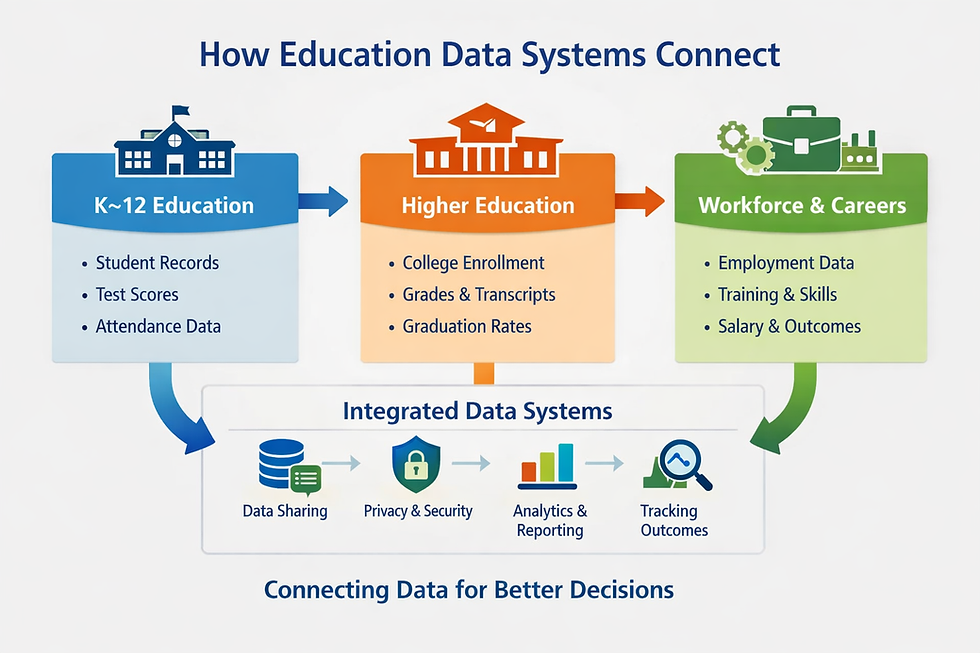
Modern education systems use big data, which includes information collected from learning management systems, student information systems, and other digital tools. This data can be used to identify trends, monitor student performance, and predict academic outcomes.

Predictive analytics can help educators identify students who may be at risk of falling behind and provide early interventions. It can also guide professional development and support school decision-making. However, these systems must be used carefully because biased or inaccurate data can lead to unfair or incorrect conclusions about students.
Education leaders must understand how data systems and algorithms work in order to make informed decisions that support student success.
Connection to my profession/learning experience: This is important for my future role in education because it emphasizes the need for data literacy. I must be able to interpret and question data to ensure that decisions are fair, accurate, and focused on student growth.
Evaluation of My Understanding
These topics helped me understand how technology, access, and data all work together in education. However, I still need to learn more about:
What I need to learn about:
How predictive algorithms in education are developed and how bias is identified and reduced in educational data systems.
Why I need to learn more about it:
Because these systems can influence important decisions such as student placement, intervention strategies, and funding, Understanding how they work is essential to ensure fairness and accuracy in educational decision-making.
A helpful resource for continued learning is:
U.S. Department of Education. (n.d.). Educational data and data privacy resources. https://www.ed.gov/data
Conclusion
The digital divide, federal broadband support, and big data analytics are key issues shaping modern education. These factors are deeply connected and influence student access, achievement, and equity. Understanding them is essential for educators who want to support all learners effectively and make informed, responsible decisions.
References
Federal Communications Commission. (n.d.). Affordable Connectivity Program (ACP). https://www.fcc.gov/broadbandbenefit
Texas Tribune. (2020, April 1). Digital divide has dire consequences in Texas. https://www.texastribune.org/2020/04/01/digital-divide-dire-consequences-texas/
U.S. Department of Education. (n.d.). Educational data and data privacy resources. https://www.ed.gov/data


I enjoyed reading your post because it was better explained as to how technology and internet access impact student learning today. One significant source that stood out to me was your discussion about the digital divide and how it affects students differently depending on where they live and their family income. I agree that students without reliable internet access face significant challenges completing assignments, participating in online learning, and communicating with teachers. This issue became especially noticeable during remote learning, when many students struggled simply because they did not have the resources they needed.
I also found your explanation of federal support programs helpful, especially when you mentioned how programs like broadband assistance help families stay connected. It reminded me…